The Recruiter Sprint Newsletter:

You’re Not Doing Email Marketing. You’re Just Sending Emails

Why More Emails ≠ More Results

If you’re running email campaigns right now: candidate profiles, newsletters, updates… you’re probably getting some opens, maybe a few replies. But if we’re being honest, most of it isn’t turning into real conversations or revenue. And when that happens, the default conclusion is that email marketing doesn’t work. It’s not true. Email works. But the way most people are using it doesn’t.


Let’s be clear about the problem

Most email campaigns today follow the same pattern: bulk sends, sales-heavy messaging, and very little targeting. Think “hot candidates of the week,” profile blasts, or generic updates sent to entire databases. From the sender’s perspective, it feels productive. From the recipient’s side, it’s repetitive and easy to ignore. Clients receive multiple variations of the same email every week. They might open the first one out of curiosity, but once they see irrelevant content, they stop engaging. Over time, they start associating the sender with noise. And once that happens, even genuinely useful emails get filtered out.


The shift: from mass email to effective email marketing

There’s a clear difference between sending emails and running an effective email strategy. Most teams are doing the former. Effective email marketing is built on three foundations:

  • structured data
  • relevant messaging
  • measurable engagement


Miss one of these, and results drop off quickly. What replaces volume is precision; emails that feel considered, targeted, and worth opening.


But first, what “good” actually looks like

High-performing email campaigns are rarely sales-driven. Instead, they’re designed to add value and build familiarity over time. The purpose isn’t to get an immediate reply. It’s to create enough relevance and trust that when you follow up, the conversation isn’t cold. Email becomes one touchpoint in a broader process, not the place where the sale happens.

The system I’d recommend

Improving email performance isn’t about writing better subject lines or tweaking phrasing. It’s about fixing the structure behind how emails are sent. That starts with your data, then how you group people, and finally what you send and how you track it.

Fix your data before anything else

This is where most campaigns fail. If your database isn’t organised properly, you can’t target effectively, and without targeting, every message becomes generic. Strong campaigns rely on clear segmentation usually two to three meaningful data points such as location, seniority, or company type. The test is simple: if you sent one email to this group, would it feel relevant to all of them? If the answer is no, the segmentation isn’t strong enough.

Build smaller, more relevant groups

Instead of emailing thousands of contacts at once, start with a smaller, clearly defined group. Even 100 to 300 well-segmented contacts is enough to generate meaningful results. The goal is to create groups where small contextual changes mentioning location, business size, or role make the message feel specific. This is what turns a mass email into something that reads like it was written with intent.

Lead with value, not offers

One of the biggest mistakes in email marketing is trying to sell too early. Most recipients are not in a position to act immediately, and repeated sales messaging quickly reduces engagement. A better approach is to consistently provide value: insights, observations, or useful content that speaks to challenges they are likely facing. Over time, this builds familiarity and credibility. When you do introduce something more commercial, it lands differently because the relationship already exists.


What strong email content actually looks like

The most effective emails tend to share a few common traits. They are:

  • short and easy to scan
  • clear on why they matter to the reader
  • focused on one idea or insight
  • written in a way that respects the reader’s time


Long, dense emails dilute the message. Clarity and relevance outperform length every time.


Start with the problem

If you’re sharing something valuable like a report, an article, or an insight then you can’t assume the reader will connect the dots themselves. You need to frame it through a problem they recognise. Instead of leading with what you’ve created, start with what they might be experiencing. That shift makes the content feel relevant rather than promotional and significantly improves engagement.

Make engagement measurable

One of the biggest gaps in most email campaigns is the lack of tracking. If you’re not measuring what happens after the email is sent, you have no way of improving it. Every email should include a clear action, typically a link to something useful. That action allows you to see who is engaging and what they’re interested in. Without this, email becomes a one-way broadcast with no feedback loop.

Use engagement to drive conversations

Very few people will reply directly to an email, even if they find it useful. That’s normal. The real value comes from what you do next. When someone clicks on your content, they’ve shown interest. That gives you a reason to follow up with context, turning what would have been a cold call into a warmer, more relevant conversation.


Why this approach works

This approach shifts email from a volume-based activity to a precision-based system. Instead of sending large amounts of generic content and hoping for a response, you create targeted communication, track behaviour, and act on signals. It also changes how you’re perceived. Rather than being another sender of irrelevant emails, you become someone who understands the market and provides useful input. That shift is what drives better engagement and stronger conversations.


How to measure success

You don’t need a complex dashboard to understand whether this is working. Focus on a few simple indicators:

  • are more people clicking through your emails?
  • are your follow-up conversations easier to start?
  • are prospects more aware of who you are and what you do?


If those are improving, your email strategy is moving in the right direction.


A simple two-week sprint to test this

If you’re looking to shift your email approach without overhauling everything at once, start with a short, focused sprint. The goal is to test relevance, engagement, and follow-up quality on a small scale.

Week 1: Structure and setup
Define one clear segment (100–300 contacts) using two to three data points. Create one value-led email tailored specifically to that group. Make sure the message is concise, problem-led, and includes a trackable link.

Week 2: Send, track, and follow up
Send the email and monitor engagement, particularly click-throughs. Identify who has interacted with the content and follow up with context. Focus on starting conversations, not pushing outcomes.

What you’re looking for is simple:

  • higher engagement compared to previous campaigns
  • easier, warmer follow-up conversations
  • clearer signals on what your audience actually cares about


If those improve, you’re on the right track.


Final note

Most people don’t adopt this approach because it requires upfront effort: cleaning data, segmenting contacts, and thinking carefully about relevance. It’s easier to send one generic email to thousands of people and hope something lands. But that’s also why most campaigns underperform. Done properly, email marketing isn’t about volume. It’s about precision. And once that system is in place, the improvement in engagement and conversation quality is immediate.


If you want to take this further

Most teams don’t struggle with ideas, they struggle with execution. Structuring data, building targeted segments, and consistently running value-led campaigns takes time and discipline.

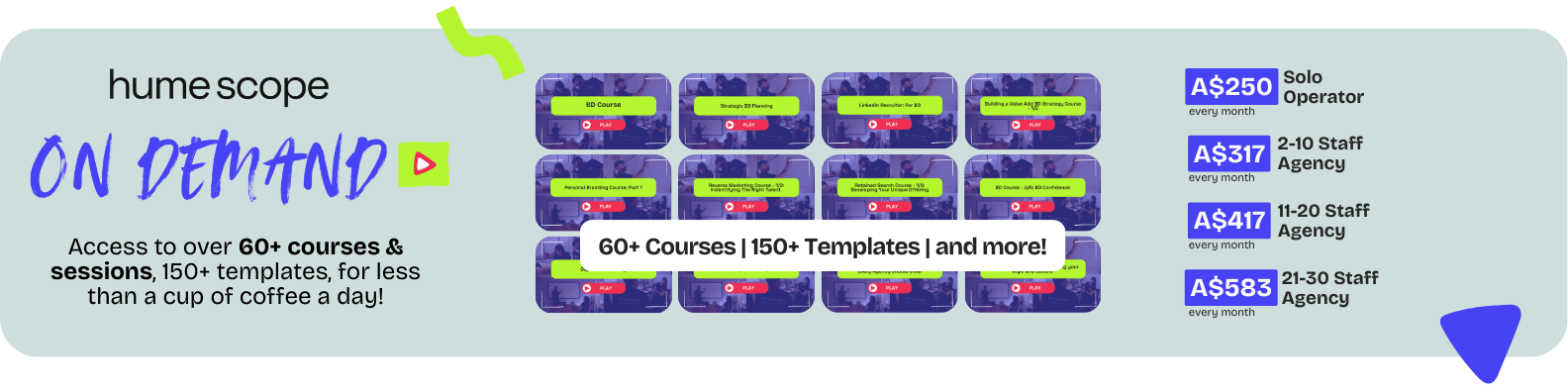
If you want a more detailed breakdown of how to build this into a repeatable system, including templates, segmentation approaches, and campaign structure, this is exactly what we cover inside our On-Demand training.

The focus isn’t theory. It’s how to turn this into something your team can run consistently, without reverting back to mass emails.


Get access to 60+ recruitment training sessions, practical templates and proven frameworks inside our On-Demand offering, built specifically for recruitment agency leaders and their teams.

Newsletter

Please enable JavaScript in your browser to complete this form.